Blog
Zylver Engineering Blog
Notes on agent architectures, production ML, cost observability, and the patterns that ended up in our product suite.
What your board needs to know about AI
Boards are being asked to provide oversight on AI at a moment when most board members lack the background to evaluate what they are hearing. The gap between what boards need to know and what they typically get in management presentations is real and consequential.
How AI is changing customer service
Customer service is one of the business functions most visibly transformed by AI. The changes are happening faster than most organizations planned for, and the outcomes depend heavily on implementation decisions that are easy to get wrong.
How to scale AI adoption from one team to the whole organization
Getting AI to work in one team is a different challenge from scaling it across an organization. What worked for the first team often fails when applied elsewhere, and the failure mode is usually invisible until the expansion is already stalled.
How to use feature flags with AI systems
Feature flags are a standard tool for gradual software rollouts, but AI systems introduce dimensions that standard feature flag patterns do not handle well. Prompts, models, and inference configurations need their own flagging approaches.
How to benchmark your AI maturity
AI maturity benchmarking helps organizations make honest assessments of where they stand, set realistic expectations for what they can accomplish, and prioritize investments that match their actual capability level rather than their aspirations.
What to tell employees worried about AI and their jobs
The conversation about AI and job security is happening in every organization introducing AI tools. Most managers handle it poorly: either with dismissive reassurance or with evasion. There is a better approach.
How to handle rate limits in production AI systems
Rate limits are the constraint that most AI applications eventually run into. Building systems that handle them gracefully, rather than breaking when they appear, is a core production engineering concern.
How AI is changing the legal profession
AI is reaching the legal profession later than some other knowledge work sectors, but the changes are arriving now and they are structural. The economics of legal work, the skills that matter, and the relationship between clients and firms are all shifting.
How to make AI strategy decisions faster
Most organizations are slower at AI decisions than the pace of the technology warrants. The cost is real: opportunities close, competitors move, and teams lose momentum waiting for decisions that could have been made weeks earlier.
How to choose your first AI use case
The selection criteria for a first AI use case matter more than most teams realize. A poorly chosen first project sets back adoption by months; a well-chosen one builds the evidence, skills, and organizational confidence needed to go further.
Streaming AI responses: what changes in your architecture
Streaming AI responses (receiving output token by token rather than waiting for the complete response) changes the perceived performance of AI features dramatically. It also introduces architectural challenges that do not exist in standard request-response systems.
How AI is changing the HR function
AI is automating significant portions of HR work, from resume screening to employee onboarding to workforce planning analysis. The change is uneven across different HR activities, and the organizations navigating it well are distinguishing clearly between what AI handles reliably and where human judgment remains necessary.
What makes an AI capability defensible
Most AI implementations are easier for competitors to replicate than the teams building them realize. Foundation models are available to everyone. APIs are the same. The question of what creates genuine competitive advantage from AI investment is worth answering before committing substantial resources.
How to communicate AI progress to leadership
AI teams often struggle to communicate progress in terms leadership finds meaningful. Technical metrics like model accuracy and latency tell part of the story, but they do not answer the questions leaders are actually asking. The gap between what AI teams measure and what leadership needs to know creates unnecessary friction.
How AI is changing the accounting profession
AI is automating significant portions of accounting work that used to require human time and expertise. The accounting profession is adapting, but the change is uneven across different types of work, different firm sizes, and different segments of the market.
How to manage AI model upgrades without breaking production
Model providers update their underlying models regularly, sometimes without announcement and without changing the API version. The same endpoint that returned reliable outputs last month may behave differently today. Managing this risk requires different practices than managing software library upgrades.
Why your AI strategy needs a portfolio view
Most organizations evaluate AI investments one project at a time, asking whether each initiative will deliver value. Portfolio thinking asks a different question: what mix of AI investments, taken together, gives us the best expected outcome? The difference in framing produces substantially different decisions.
What to do when your AI project loses momentum
Most AI projects do not fail with a dramatic announcement. They slow down gradually, lose visibility on the roadmap, and eventually stop without a clear decision being made. Understanding the patterns that cause AI projects to stall is the first step to recovering them.
How to build fallback chains in AI systems
AI systems fail in ways that traditional software does not. Model APIs go down, outputs fail validation, latency spikes, and costs spike. Fallback chains are the engineering pattern that makes AI-powered features resilient to these failure modes without requiring constant human intervention.
What AI means for the outsourcing industry
Business process outsourcing has been one of the most durable cost-management strategies in enterprise operations. AI is changing the economics that made outsourcing attractive, and the change is faster and more structural than most enterprise buyers and outsourcing providers have prepared for.
Why some teams adopt AI faster than others
AI adoption speed varies considerably across teams, even within the same organization with access to the same tools. The variation is not random. Understanding what predicts fast adoption helps teams that are behind identify what to change, rather than attributing the gap to factors they cannot control.
How the AI vendor market is consolidating and what it means for buyers
The AI vendor market is undergoing structural consolidation. The number of viable foundation model providers is narrowing, platform layers are absorbing point solutions, and enterprise buyers who made early AI procurement decisions are renegotiating or reconsidering them. Understanding the consolidation forces helps buyers make better decisions now.
How to decide which AI investments to stop
Most organizations have a process for starting AI investments and almost none have a process for stopping them. The result is a portfolio that accumulates underperforming projects indefinitely, consuming resources that could go to initiatives that actually work. Deciding what to stop is as important as deciding what to start.
How AI systems accumulate technical debt differently
AI systems accumulate technical debt through mechanisms that traditional software engineering does not prepare you for. The debt is real, it compounds, and it shows up in ways that are harder to detect and more expensive to resolve than the technical debt most engineers are used to managing.
Why most AI training programs fail
Organizations spend significant resources on AI training: workshops, online courses, certification programs, lunch-and-learns. Most of it does not produce lasting change in how people work. Understanding why AI training fails is more useful than adding more training.
How AI is changing what companies buy from consultants
The traditional consulting model sells access to knowledge that clients do not have: frameworks, benchmarks, best practices, research. AI has made much of that knowledge accessible directly. The consulting market is not disappearing, but what clients are willing to pay for is shifting, and both buyers and sellers need to understand the change.
Why AI projects need sponsors, not just champions
Most AI projects have champions. The engineer who believes in the technology, the team lead who pushed for the pilot, the individual contributor who made it work. What they often lack is a sponsor: someone with organizational authority who has committed the project's success to their own outcomes. That gap is why so many AI pilots succeed and so few scale.
How to think about testing AI systems
Testing AI systems requires a different mental model than testing traditional software. The outputs are probabilistic, the failure modes are subtle, and the standard unit-test-to-integration-test pyramid does not map cleanly onto AI. Here is what a more useful testing framework looks like.
Why AI adoption fails in the middle
AI adoption has a characteristic failure pattern that does not look like failure at first. The launch goes well, early adopters are enthusiastic, usage metrics look promising. Then something stalls. Understanding what happens in the middle is more useful than studying either the launch or the endpoint.
What enterprise AI buyers get wrong about build versus buy
The build-versus-buy decision for AI is genuinely different from the same decision for traditional software. The frameworks that worked for ERP or CRM do not transfer cleanly, and the mistakes companies make are predictable enough that they are worth understanding before you make them.
Why most AI strategies are technology plans in disguise
When companies say they have an AI strategy, they usually mean they have a plan to acquire and deploy AI technology. That is not a strategy. The difference matters more than it seems, and the companies that confuse the two end up with expensive infrastructure and no competitive advantage.
How to design AI systems that degrade gracefully
AI systems fail in ways that traditional software does not. The outputs are probabilistic, the failure modes are subtle, and the degradation is often invisible until it becomes a problem. Designing for graceful degradation is not optional for AI systems in production.
How to build AI accountability into your team
AI adoption without accountability creates a specific failure mode: the tool gets used, the outcomes drift, and nobody knows why. Building accountability into how a team uses AI does not require bureaucracy. It requires clarity about what AI is supposed to do and honest tracking of whether it is doing it.
Why AI changes how companies think about data ownership
Data has always mattered, but AI changes what it means to own it, what it is worth, and what obligations come with it. The companies working through these questions now are ahead of regulatory and competitive pressure that will arrive whether they are ready or not.
The AI reporting problem
Executives want to know how AI investments are performing. Most organizations cannot tell them. The metrics being tracked measure activity, not value, and the reporting structures that work for traditional software do not transfer to AI. Here is what better AI reporting looks like.
Why AI systems need version control for prompts
Prompts are the most frequently changed component of most AI systems, and most teams track them worse than any other code. No history, no rollback, no understanding of what changed between the version that worked and the version that does not. This is a solvable problem with known solutions.
How AI changes the onboarding problem
Onboarding new employees and new users is expensive, slow, and often poor quality. AI does not eliminate this problem but it changes its shape in ways that matter. The teams designing onboarding with AI in mind are arriving at different approaches than the ones following traditional playbooks.
What AI means for software pricing
AI is changing the economics of software in ways that are starting to show up in pricing models. Usage-based pricing, outcome-based contracts, and AI-specific cost structures are challenging how software gets bought and sold. What buyers and vendors need to understand about where this is heading.
The case for slowing down your AI roadmap
The pressure to move fast on AI is real and the costs of moving too fast are underappreciated. The organizations that build durable AI capability tend to spend more time than their peers on evaluation, integration, and the organizational work that determines whether AI actually changes how things get done.
How to run an AI proof of concept that actually transfers to production
Most AI proofs of concept succeed and most AI production deployments disappoint. The gap is not a mystery: POCs and production systems are built under different conditions, measured by different criteria, and staffed by different people. Closing the gap requires designing the POC differently from the start.
The AI vendor due diligence checklist
Buying AI software is different from buying traditional software. The evaluation criteria are different, the failure modes are different, and the questions vendors are used to answering are not always the ones that matter most. A practical guide to what to ask and how to verify the answers.
Getting AI adoption right when your team is skeptical
Skeptical teams are not a problem to be overcome. They are a quality signal. The organizations that build lasting AI adoption start by taking skepticism seriously rather than trying to sell past it. Here is what that looks like in practice.
How to structure an AI center of excellence
An AI center of excellence can accelerate adoption and build durable capability, or it can become a bottleneck that slows everything down. The difference is almost entirely structural. Here is what the effective ones do differently.
The AI infrastructure decisions that age poorly
Some infrastructure choices that seem reasonable when you are building your first AI feature become serious liabilities as the system matures. The teams that have been building production AI long enough have learned which decisions these are. Most teams learn them the hard way.
Why AI habits are harder to build than AI tools
Deploying an AI tool is a technical problem. Getting people to use it consistently is a behavioral one. Most organizations solve the first problem and then wonder why adoption numbers are disappointing. The second problem requires different thinking.
The AI strategy question most companies avoid
Most organizations building AI strategy answer the questions about what to build and how to implement it. The question that gets avoided is the harder one: what will you stop doing because AI changes the economics? Avoiding it produces AI strategies that add cost rather than change the business.
How AI is changing the software vendor landscape
The software vendor market is reorganizing around AI in ways that will matter to every buyer. Some changes are already visible; others are still working through the system. Understanding what is happening makes for better purchasing decisions.
How to think about AI latency in product design
AI latency is not a single number and it does not behave like traditional API latency. The teams that design good AI-powered products understand what makes latency feel acceptable, what makes it feel broken, and how to design around the constraints that cannot be engineered away.
What good AI observability looks like
Traditional observability tells you if your system is up and how fast it is. AI systems need a second layer: is the output quality good, is it degrading, and why? The teams shipping reliable AI have built this layer. Most have not.
The AI skeptic's guide to getting value anyway
Healthy skepticism about AI is well-founded. A lot of what gets claimed about AI does not hold up. But wholesale skepticism is also a trap: a few specific AI applications genuinely change what is possible, and dismissing everything because some things are overhyped means missing those.
AI in regulated industries: what actually changes
The conversation about AI in regulated industries is usually framed as a conflict between innovation and compliance. That framing is wrong. The real constraint is not regulation but the specific requirements that regulation imposes, which are more tractable than they appear and sometimes work in AI's favor.
The quiet default: why most AI projects choose the safe option
Most AI projects make a conservative choice somewhere that limits what they can accomplish. The choice is rarely announced as conservative. It is presented as sensible, pragmatic, or appropriately scoped. Understanding why this happens is the first step toward making decisions that are actually right rather than merely defensible.
The AI talent market: what companies are actually competing for
The AI talent shortage most companies experience has almost nothing to do with AI researchers and everything to do with engineers who can ship AI products reliably. Understanding the actual shape of the talent market changes how you hire, how you retain, and where you invest in developing internal capability.
What makes an AI integration actually stick
Most AI integrations get adopted initially and abandoned quietly. The ones that stick share a set of properties that have less to do with AI quality and more to do with how the integration fits the workflow, builds trust, and earns a place in how people actually work.
How AI is reshaping competitive strategy
The competitive advantages that have held for decades are being stress-tested by AI. Speed of implementation is no longer a durable moat. The organizations rethinking where their real advantages lie are better positioned than those optimizing harder for advantages that are eroding.
How to evaluate AI tools before you buy
AI tools perform well in vendor demos. They perform less well when you run them on your actual data, your actual use cases, and your actual failure modes. The gap between demo quality and production quality is where most regrettable AI purchases originate.
The AI product manager: a new role taking shape
Building products with AI components requires product managers to develop new skills, own new responsibilities, and apply different judgment than traditional software PM work demands. The role is evolving faster than most PM playbooks have caught up.
What AI means for technical documentation
Technical documentation has a new audience: AI systems that consume it to answer questions, generate code, and assist with operations. That changes what good documentation looks like, which parts of the investment pay off, and where human writing still has no substitute.
How to sustain AI momentum after the first win
The first AI project is usually the easiest. It is cherry-picked, high-visibility, and benefits from novelty. What happens next is where most organizations stall. Sustaining momentum requires a different approach than generating it.
How AI is changing software testing
AI tools are reshaping software testing in ways that go beyond generating test boilerplate. The more interesting changes are in what gets tested, who finds the gaps, and how teams decide what 'enough coverage' means.
How to build an AI-ready data culture
Organizations that struggle with AI adoption often discover their real problem is data: not enough of it, not clean enough, not accessible enough, not understood well enough. The technical problems are usually solvable. The cultural ones are harder.
What the best AI teams actually do differently
Most organizations that struggle with AI adoption are doing the obvious things. They have access to the same models, the same tools, and the same information. The differences that matter are almost never the ones that get written about.
How AI changes hiring in technical roles
The skills that distinguish strong technical candidates are shifting. Hiring processes that optimize for what candidates can build from scratch are increasingly misaligned with what makes a technical professional valuable when AI tools are available.
Why AI teams need a culture of evaluation
Evaluation infrastructure is a tooling problem. Evaluation culture is an organizational problem. Teams that build the tooling without changing how they make decisions discover that the tooling goes unused. The harder work is building the norms.
How to think about AI risk in your organization
Most organizations either overestimate AI risk (paralysis) or underestimate it (blind deployment). A calibrated approach to AI risk is not about building compliance frameworks. It is about understanding which failures actually matter and designing proportionate mitigations.
What to prioritize in your AI roadmap for 2027
Most AI roadmaps list capabilities the team wants to build. The ones that actually deliver value are organized around a different set of questions: where is the current system falling short, what infrastructure enables multiple use cases, and what can the organization realistically absorb?
The state of AI in 2026: what changed and what did not
2026 was a year of real progress in AI capability and significant noise about what that progress means. Here is an honest accounting of what actually shifted, what stayed stuck, and what that implies for the year ahead.
How to run an AI retrospective
Standard retrospective formats were designed for software development cycles, not AI systems. An effective AI retrospective reviews different dimensions, requires different data, and produces different outputs than a typical sprint retro.
The real cost of AI technical debt
AI technical debt accumulates differently than traditional technical debt and is harder to see until the costs become unavoidable. The shortcuts that look expedient in early AI deployments create compounding costs that most organizations are underestimating.
The second act of enterprise AI: what separates pilots from platforms
Most organizations have successfully run AI pilots. Far fewer have converted them into production platforms that deliver compounding value. The gap between pilot success and platform capability is not a technology problem.
How to build AI adoption habits in a team
Most teams plateau at occasional AI use rather than reliable integration. The difference between sporadic adoption and habitual use comes down to where learning accumulates, how friction gets removed, and whether failure is processed or ignored.
The AI vendor due diligence checklist
Evaluating AI vendors with traditional software procurement criteria misses the risks that matter most. Here is what to ask about production reliability, data handling, model versioning, and vendor lock-in before you commit.
Why AI features need different success metrics
Organizations routinely measure AI feature success using the same metrics they apply to traditional software features. The mismatch produces misleading signal, misallocated investment, and AI systems that optimize for the wrong outcomes.
The case for boring AI
The organizations getting the most value from AI are not the ones deploying the most sophisticated systems. They are the ones deploying narrow, reliable systems that handle specific tasks predictably and at scale.
The AI skills gap is not what you think it is
The conventional narrative says companies need more ML engineers and data scientists. The actual shortage is different: domain experts who can evaluate AI outputs, and organizations that know what they are trying to accomplish before they start hiring.
What AI systems need from product managers
AI features have requirements that traditional product management frameworks do not address well. The gap between PM practice and AI system needs produces poorly specified features, misaligned success metrics, and avoidable production failures.
Prompt engineering is not a substitute for system design
Prompt engineering is a real skill with real leverage. It is also the most commonly misused tool in AI development: applied to problems that require system redesign, not better prompts.
How to measure AI feature success
AI features fail in ways that standard product metrics miss. The user can be unhappy without the error rate going up. Quality can degrade without session length changing. Measuring AI feature success requires a different instrumentation strategy.
How AI changes the economics of software development
AI coding tools are compressing certain parts of the software development cycle. The parts they compress are not the expensive parts. Understanding where the real costs live changes how you should think about the productivity claims.
What good AI governance looks like
AI governance is not primarily a compliance exercise. It is the set of decisions, processes, and accountability structures that determine whether AI systems produce outcomes the organization can stand behind. Most organizations have less of it than they think.
Evaluating LLMs for production: what benchmarks don't tell you
Public benchmarks measure what models can do under controlled conditions. Production performance depends on how models behave on your data, in your context, against your quality criteria. Here is how to build an evaluation that actually predicts production outcomes.
How to make the business case for AI investment
Most AI investment proposals fail not because the technology does not work, but because the proposal is framed around capability rather than outcome. Here is how to build a case that finance and leadership will approve.
The AI vendor landscape is consolidating: what it means for buyers
The number of credible AI infrastructure vendors is shrinking. For enterprise buyers, that changes the procurement calculus in ways that are not yet reflected in most vendor evaluation frameworks.
How to structure an AI team
There is no single correct structure for an AI team. There are structures that work for specific organizational contexts and ones that create predictable failure modes. Here is how to tell the difference.
What to ask before buying an AI platform
Most AI platform evaluations focus on benchmark scores and feature checklists. The questions that predict whether a platform will work in production are different ones.
The hidden cost of context switching in AI workflows
Multi-step AI workflows lose information at every boundary. The handoff between steps is where accuracy degrades, latency compounds, and cost accumulates. Most teams do not measure it.
What separates AI teams that ship from teams that stay in pilot
Most AI pilots succeed. Most AI products don't. The gap is not technical capability. It is a set of organizational and process decisions that teams make before the pilot ends.
Why AI systems drift without contracts
AI systems degrade silently over time. Not because the model changes, but because the assumptions baked into the system (about inputs, outputs, and behavior) are never made explicit enough to enforce.
Per-tenant AI cost attribution: why aggregate dashboards are not enough
Aggregate AI spend tells you what you're paying. Per-tenant attribution tells you who's driving it, what you can charge for it, and which tenants are profitable. Building it is harder than it looks.
The observability debt in AI systems
AI systems accumulate observability debt faster than traditional software because the failures are probabilistic, latent, and compound before they surface. Here is what that costs when you actually pay it.
RAG vs fine-tuning: why the comparison mostly doesn't make sense
RAG and fine-tuning solve different problems. Treating them as cost-quality tradeoffs for the same job leads to expensive models that still don't know what they need to know.
Why your AI proof of concept works but your product doesn't
AI proofs of concept are optimized to demonstrate capability under conditions that don't hold in production. Here is what changes when the demo environment goes away.
The token budget problem: why your production agents run out of room
Context windows are finite. Production workloads are not. Here is what actually breaks when an agent exhausts its budget, and three patterns that prevent it.
AI workflow automation vs RPA: what actually changes
RPA automates what a human clicks. AI automation handles what a human decides. The distinction determines which workflows you can hand off and which ones will break.
Why long-running AI agents fail silently
Agents degrade before they break. Context pressure accumulates, attention patterns shift, and outputs drift, all without an error code. Here's how to detect it and what to do about it.
The case for structured outputs in production AI
Most AI systems in production are parsing prose from LLMs when they should be requesting structured JSON. The cost and reliability gap is larger than teams expect.
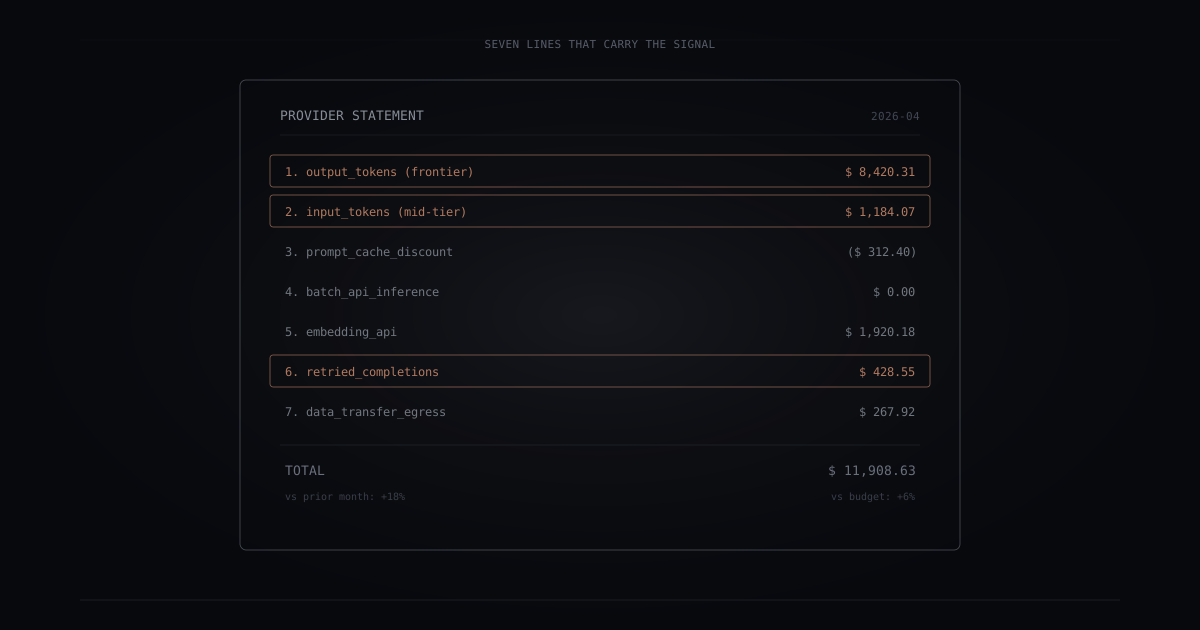
Reading an LLM bill: line items that actually matter
Most LLM bills get scanned for total cost. Seven line items carry the real signal. A 5-minute monthly review that turns the bill into a diagnostic.
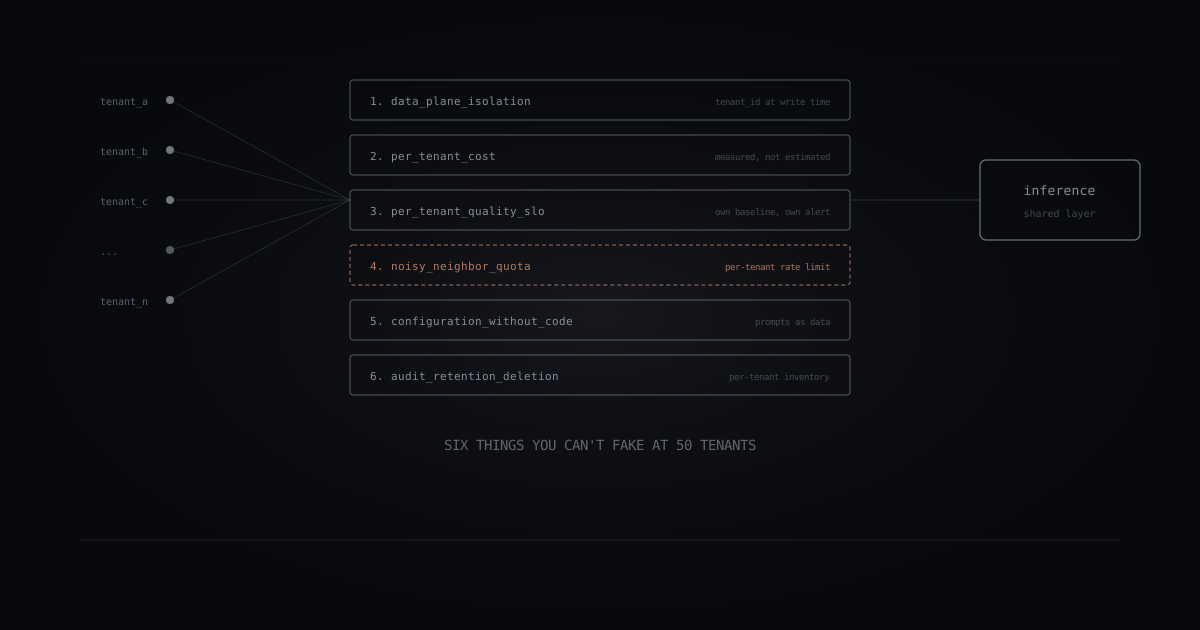
Multi-tenant AI: what you can't fake when you have 50 customers
Single-tenant AI hides bad architecture. Multi-tenant AI exposes it. Six things that compound across a tenant set and cannot be deferred.
How to set AI goals that actually measure progress
Most AI initiatives fail the measurement test before they begin. The goals are either too vague to evaluate or too narrow to matter. Here is how to set ones that work.
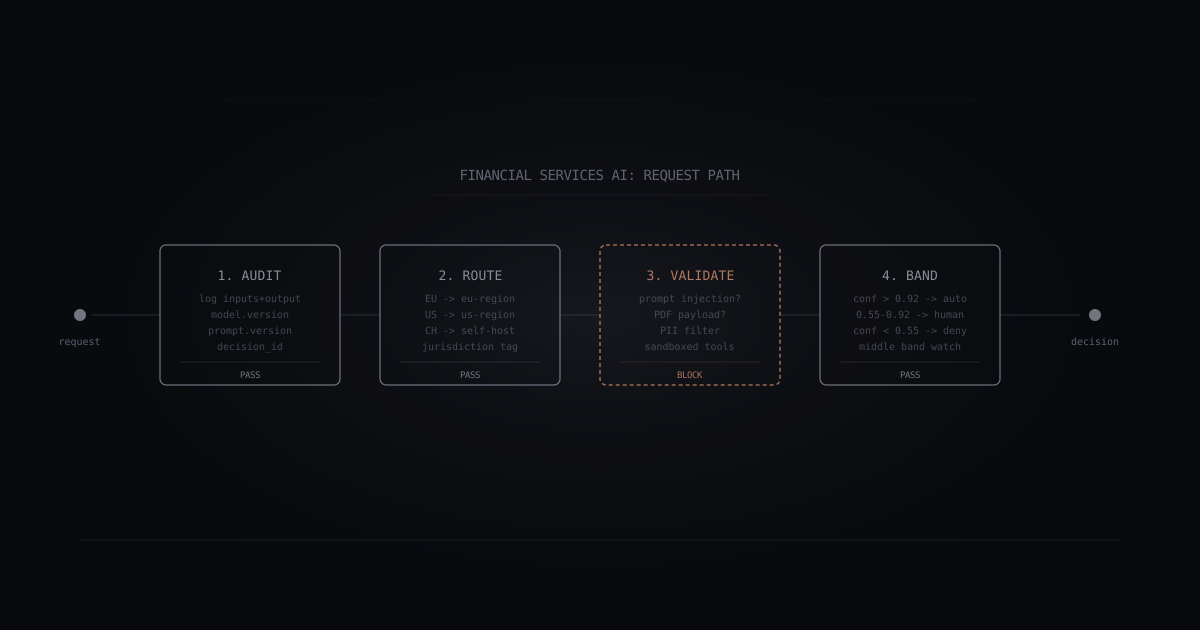
Financial services AI: four constraints that reshape the architecture
Generic AI patterns break in financial services. Four constraints (audit, residency, adversarial input, risk asymmetry) reshape architecture from day one.
How AI is changing the sales function
AI is reshaping sales in ways that are more nuanced than the pitch decks suggest. Some tasks are genuinely going away. Others are becoming more important.
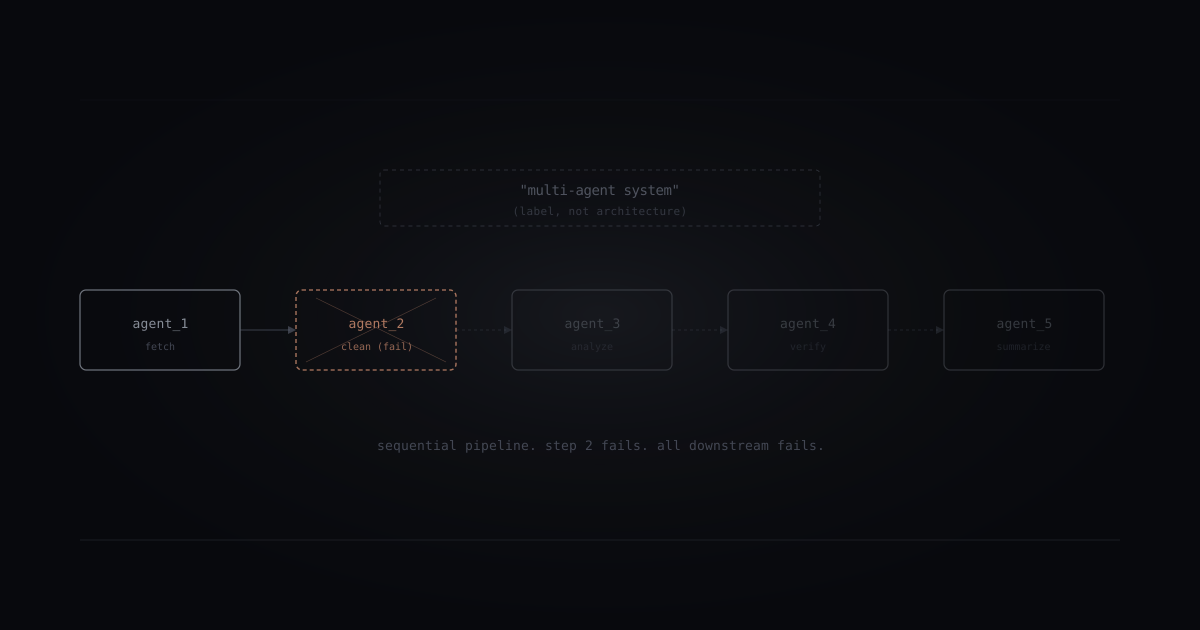
Most multi-agent systems are sequential pipelines wearing a costume
Most 'multi-agent' systems are sequential pipelines with role-play prompts. Three diagnostic questions to tell the difference.
Caching strategies for LLM applications
LLM responses are expensive, slow, and often repeated. Here is how to cache them without building a system that silently returns stale answers.
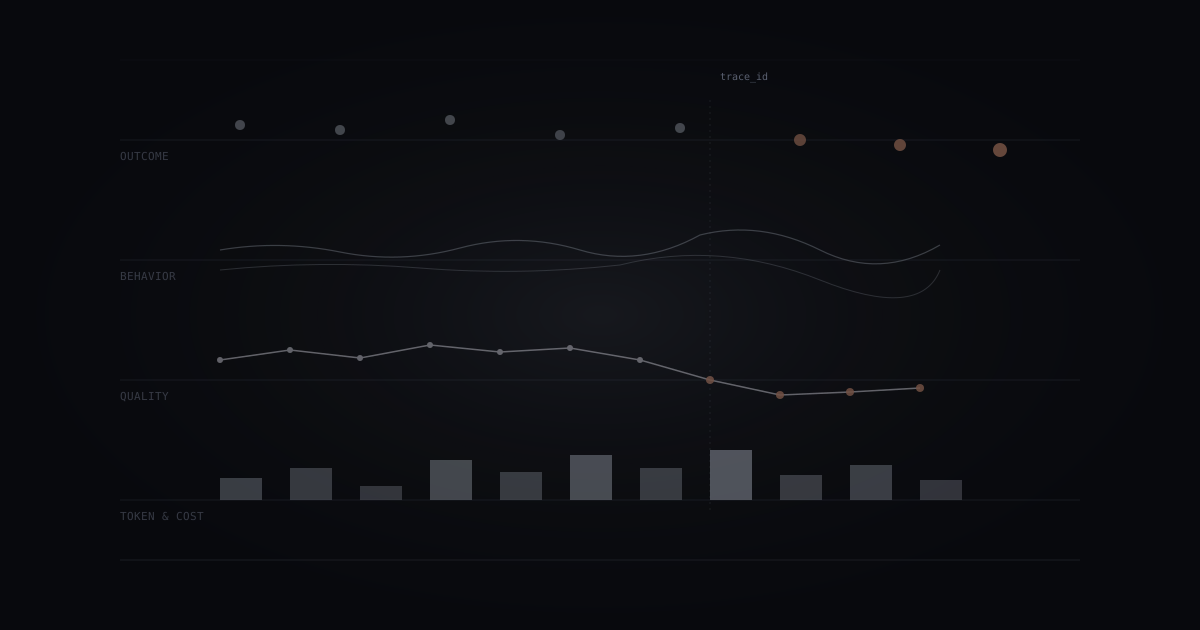
What to instrument when your AI degrades in production
Most AI systems fail silently. Latency dashboards say 200 OK while quality drifts. Here is the four-layer telemetry stack that catches it.
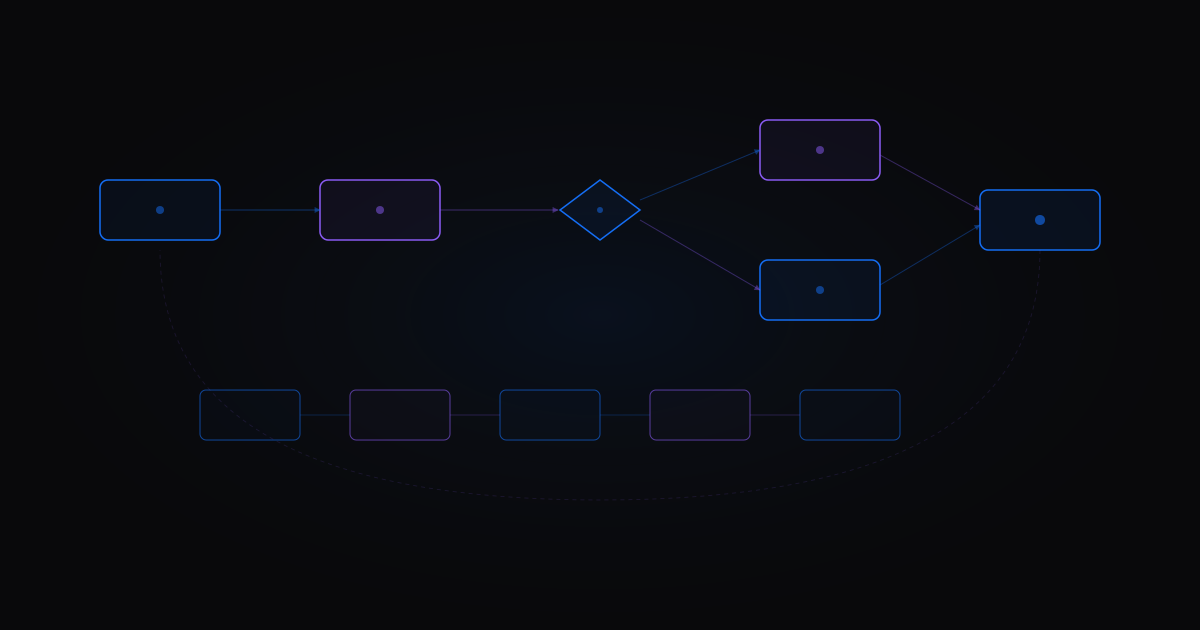
What Business Processes Can Be Automated with AI in 2026
A practical guide to identifying which business processes benefit most from AI automation, from document processing to customer operations, with real implementation considerations.

Why Your AI Gets More Expensive Over Time (And How to Reverse It)
AI costs often increase after deployment. Learn the engineering patterns for intelligent distillation, model routing, and cost optimization that reduce per-operation costs by 50-80%.

Beyond Demos: Building AI Systems That Actually Work
Most AI projects fail in production. Here's why the gap between demo and deployment is where real engineering begins, and what production AI actually requires.
How to Choose an AI Platform or Partner: A Practical Evaluation Guide
Evaluating AI vendors and platforms is difficult. Specific questions to ask, red flags to watch for, and criteria that separate products and firms that ship from ones that only advise.

AI Implementation Costs in 2026: What Companies Actually Spend
Realistic breakdown of AI implementation costs including infrastructure, development, API spend, and ongoing operations. What to budget and where companies overspend.

Beyond Chatbots: Multi-Agent Architecture Patterns for Production
Single-model AI hits a ceiling fast. Here are the architecture patterns we use to build multi-agent systems that coordinate hundreds of specialized agents in production.

The State of AI in Austin, Texas: Why the Capital City Is an AI Hub
Austin's AI ecosystem is growing fast. From enterprise adoption to the startup scene, here is what makes Austin a center for AI innovation and why it matters for local businesses.

How AI Is Reshaping Professional Services
A clear-eyed look at what AI does better than consultants, what it cannot replace, and how the consulting industry is transforming. Written by a team that used to sell consulting and now ships products.

The AI Observability Gap: What You Can't See Is Costing You
Most AI systems run without meaningful monitoring. Learn the four dimensions of AI observability and how to build the monitoring infrastructure that makes optimization possible.

AI for Small Business: When It Makes Sense (And When It Doesn't)
Small businesses are bombarded with AI promises. A practical framework for evaluating whether AI adoption is worth the investment for your company, and what to do if it is not.
Get insights like this delivered monthly.
No spam. Unsubscribe anytime.